

Bravezone › Blog


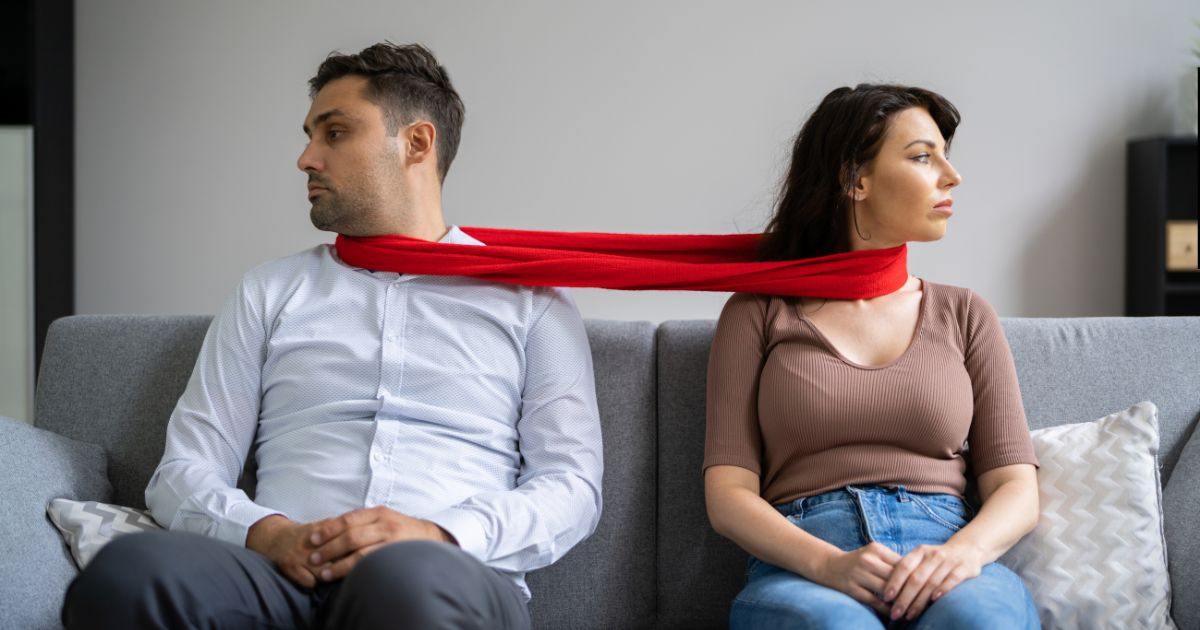


Let’s be honest about what’s really happening when you look in the mirror and question your worth. Somtimes we don’t even realize how bad our self concept actually is.
Most self-help articles will tell you that overcoming self-doubt is simply a matter of challenging your negative thoughts, repeating positive affirmations, or buying a new planner. They treat self-doubt like a minor behavioral glitch; a little dust on the lens that you can just wipe away with a sticky note and a smile.
That advice is a profound insult to your lived experience.
If you’re a high-achieving professional, a parent, or someone who is completely exhausted from holding the weight of the world on your shoulders, you already know that surface-level positive thinking cannot touch the heavy, suffocating grip of deep-seated self-doubt. You cannot logic your way out of a survival pattern that is wired directly into your nervous system.
Self-doubt doesn’t live in your conscious mind. It lives in the subconcious; the part of the mind you’re unaware of. It dictates everything you think, feel and do.
What Self-Doubt Actually Is
Self-doubt is not a lack of competence, and it is certainly not a character flaw. Think of it as a biological alarm system.
When your nervous system learns early in life that you’re unsafe, unsupported, or unwanted, it adapts. It creates a baseline of survival. For me, that baseline was created as a result growing up in a very lonely childhood. I was bullied at home and bullied at school, absorbing the silent, crushing message that I was not safe, valued or loved.
When your internal world feels that unsafe, your subconscious makes a desperate, protective calculation: If I cannot be safe as I am, I must shrink. I must hide. I must accept less.
That blueprint does not magically dissolve just because you grow up, get a degree, land a career, or build an adult life. It follows you into every single room, every single boardroom, and every single relationship you enter.
Where Self-Doubt Comes From
Because my nervous system equated smallness with safety, self-doubt showed up everywhere. It dictated the compromises I made and the mistreatment I quietly tolerated.
I stayed in a job that didn’t appreciate me because I didn’t value myself. I genuinely didn’t think I could do any better.
In my intimate relationships, that same subconscious terror played out. I married someone I didn’t love and wasn’t attracted to. Why? Because it felt like the safer easier option. I seriously didn’t think anyone would want me and that I would have to settle for anything just to have something. I tolerated harassment and accepted it when he exploited my issues with my family, and when my family exploited my issues with my new family. Everyone around me was crossing boundaries and doing things that were entirely inappropriate, and I just kept taking it.
I kept taking it because I was terrified of setting boundaries. I was terrified of being alone, terrified of abandonment, and terrified of being judged. A part of me didn’t even realize how unacceptable their actions were. I guess that part of me thought it was all I deserved. I was consumed with not just self-doubt, but shame and fear.
That’s the true cost of self-doubt. It convinces you to abandon yourself long before anyone else ever does, all because your nervous system learned a long time ago that staying small was the only way to survive.
Why the Usual Advice Does Not Work
You cannot journal or talk therapy your way out of a nervous system that has been conditioned for survival since childhood.
When you read articles that tell you to “just challenge your negative thoughts,” it feels like someone handing you a band-aid while you’re bleeding internally. Traditional coaching treats self-doubt like a bad habit of the mind. But self-doubt isn’t a mindset problem. It is a somatic imprint.
If your body learned early on that your boundaries don’t matter, no amount of positive affirmations or gratitude lists will make you feel safe speaking up. Your nervous system doesn’t respond to pep talks. It responds to safety, regulation, and truth.
Changing the Belief Underneath: The Day Everything Shifted
For a long time, I kept repeating the cycle. I needed to keep re-experiencing abuse after abuse, mistreatment after betrayal, rejection after judgment, and wave after wave of loneliness, isolation, and bullying.
Embrace your struggles, because “your lessons in life will be repeated until learned.” My threshold for pain must’ve been really high, because I seemed to have needed a lot of lessons before I finally woke up.
And when I reached rock bottom, it turned out to be a really good place. I just got so tired of the abuse, the intimidation, and the harassment in my marriage. But when I looked closer and got curious, I realized that relationship wasn’t an isolated incident. It was a mirror reflecting every other environment I had ever accepted. Home, school, work, partnership. It had been happening everywhere.
Sitting at that rock bottom, my whole life flashed before my eyes, and a terrifying, liberating truth hit me: What is going on here?
That was the day I stopped pointing fingers outward and started looking within. I made myself the problem.
I always tell my clients this: If you’re not the problem, then you can’t be the solution. It’s not empowering to see yourself as a helpless victim of the universe. If you’re going to act like a doormat, the world is going to treat you like one.
That was the exact day I said no more. I realized that if I don’t honor myself, nobody else is going to honor me. How I treat myself is the exact blueprint for how other people are going to treat me.
That rock bottom led to deep meditation, which unlocked insight and wisdom, which built courage, which finally forced entirely new behaviors.
What to Do in the Moment: Asking the Right Question & Building Self-Trust
When working with clients, I start with a very simple, revealing question: What do you want your life to look like?
If a client cannot conjure a clear visualization for it, they aren’t even at the starting line yet. Because most of the time, we think we need one thing when we actually need something entirely different.
I used to think I needed my husband to understand me. What I really needed was to learn how to love myself. My clients fall into this exact trap every single day.
This is why the bravezone reset, ie: the intro session is so powerful. I ask the right questions to get straight to the core truth. That session gives you clarity, but more importantly, it delivers a nervous system reset and a subconscious reprogramming. You don’t just understand your self-doubt logicall, you feel the shift right away in your body. You feel calmer, more in charge, and ready to step out of the exhaustion.
If you want to start trusting yourself today, you don’t need a massive overhaul. Start with one small promise to yourself and fulfill it. If you say you’re going to get up at a certain time, get up. If you commit to reading a specific number of pages a day, do it. Rebuilding self-trust happens in the quiet micro-moments where you prove to your own nervous system that your word is safe to rely on.
Frequently Asked Questions
Why can’t I ever make a simple decision without second-guessing myself?
Because self-doubt trains your nervous system to look for danger in every choice. When you don’t trust your internal baseline, even choosing an email draft or ordering off a menu feels like a high-stakes test you might fail. True decision-making doesn’t come from more over-analyzing; it comes from somatic grounding, where your body finally feels safe enough to pick an option and stay with it.
Is self-doubt the same thing as lacking confidence?
No. Confidence is often just a mask people wear on the outside to look put together. Self-doubt is deeper. It’s a subconscious survival program telling you that who you naturally are is somehow wrong, unsafe, or unacceptable. You can look entirely competent to the world and still be eaten alive by self-doubt behind closed doors.
Why do I keep attracting partners or environments that make me doubt myself even more?
Because your nervous system gravitates toward what is familiar. If you grew up learning that love and safety require shrinking, your subconscious will comfortably recreate those exact dynamics in your adult relationships and career. Until you change the internal belief, your outer world will keep reflecting it back to you.
How do I stop looking to other people for validation?
You stop by recognizing that outsourcing your choices is just an old survival mechanism from childhood. When you were little, looking outward kept you safe. As an adult, looking outward keeps you stuck. The moment you start turning inward and honoring your own boundaries, the desperate need for external permission simply dissolves.
Start With One Promise
You don’t have to wait for another breakdown to give yourself permission to choose differently. You don’t have to white-knuckle your way through relationships or environments that require you to shrink.
The moment you decide to drop out of your head and into your body, everything shifts. You stop looking at everyone else as if they hold the secret key to worthiness. You realize that your presence is enough, your boundaries are sacred, and you are finally allowed to take up space.